
Reiterating Sitharaman's statement that this is a youth power budget, Modi emphasised that the provisions made in the budget will prepare leaders, innovators and creators across different sectors.

Every UN secretary-general has flagged the financial situation, but Antonio Guterres has issued the direst warning yet, calling it a 'race to bankruptcy and of imminent financial collapse, points out Ambassador T P Sreenivasan.

Dubai's core promise -- that it is an oasis untouched by regional storms -- has been tested in full public view. The coming months will show whether investors view the attacks as a short-lived disruption or a deeper signal of lasting risk, points out Asif Ullah Khan.

India is already a heavyweight in global farm trade in pockets such as rice exports, but experts are urging a pivot from a subsidy- and procurement-driven mindset to a productivity and nutrition strategy that still shields farmers from volatility.

Rapper-turned-politician Balendra Shah's Rastriya Swatantra Party (RSP) is poised to form the next government in Nepal after a decisive victory in the general election, significantly impacting established political parties.

India Inc on Sunday hailed the Union Budget 2026-27 as a 'structural shift' in the country's technology landscape, noting that the government is moving beyond fragmented pilots to build foundational layers where AI serves as a 'horizontal enabler' for the entire economy.

'The trade deficit in some sectors is huge and that is an area of opportunity to localise.'

President Droupadi Murmu addressed the nation on the eve of Republic Day, emphasising India's role in promoting peace, the empowerment of women, and the country's economic growth.

Prime Minister Narendra Modi inaugurated Skyroot's Infinity Campus, highlighting government reforms and the rise of private space companies in India. He also unveiled the company's first orbital rocket, Vikram-I.
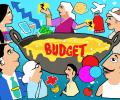
Investors and startup executives are calling for extending the period for an entity to be recognised as a startup from 10 to 15 years for deep-tech companies.

Even as the benchmark and broader indices were down sharply on Monday due to escalating tensions in West Asia, the Nifty Defence index ended the session in the green.

Stock market is gearing up for an eventful week ahead where key triggers such as quarterly earnings from corporates, the US Fed interest rate decision and the upcoming Union Budget for 2026-27 would grab the limelight, analysts said.

India needs another shot of difficult reform, of the kind only possible at gunpoint. Mr Trump holds that gun to our heads now. A drastic reduction in tariff protection, other elements of sarkari wet-nursing will force entrepreneurial India to become competitive again, argues Shekhar Gupta.

The tariff removal will lower prices of Harley's large-displacement imported motorcycles, which retail between 14.5 lakh and 45.8 lakh but after the duty cut volumes are expected to remain modest.

India has stated it will wait for the outcome of the elections in Bangladesh and the resulting mandate before addressing any existing issues. The country also affirmed its support for free, fair, inclusive, and credible elections in Bangladesh.
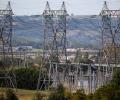
The government on Wednesday put out the draft of a new policy that projects the country's power sector will need Rs 50 trillion in investments by 2032 and Rs 200 trillion by 2047, proposing ambitious reforms in generation, transmission and distribution.

Prime Minister Narendra Modi on Sunday asserted that India is preparing with full strength to host the 2036 Olympic Games.

India's real GDP grew 8.2 percent in the second quarter of 2025-26, up from 7.8 percent in the first quarter and 7.4 percent in the fourth quarter of the last fiscal.

To digitise Customs processes, the Union finance ministry is planning to integrate the Indian Customs Electronic Gateway (ICEGATE), Risk Management System (RMS), and Indian Customs Electronic Data Interchange System (ICES) into a single unified national Customs platform, according to government sources.

From a surge in startups to crewed mission preparations, 2025 marks a transformative year as India eyes $44 billion space economy by 2033.

The government on Sunday gave a strong push to upgradation and expansion of healthcare infrastructure, medical education and pharma sector with the Union Budget 2026-27 announcing a slew of steps, including those aimed at making India a global hub for allied healthcare professionals and biopharma manufacturing.

The LPG squeeze on India's restaurant sector is the quotidian face of a deeper crisis.

The Union Budget for 2026-27, presented by Finance Minister (FM) Nirmala Sitharaman on Sunday, which was a first, had an excellent domestic macro backdrop. According to the first advance estimates, gross domestic product (GDP) in constant prices is projected to grow 7.4 per cent in the current financial year, against 6.5 per cent in 2024-25.
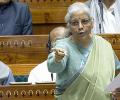
Finance Minister Nirmala Sitharaman launched a strong attack on Rahul Gandhi and the Congress party, accusing them of compromising India's interests on the world stage and selling out farmers and the poor during their time in power.

The Indian economy is likely to grow at 7.4 per cent in 2025-26, up from 6.5 per cent in the previous fiscal, mainly on account of better performance of manufacturing and services sectors, as per the government data released on Wednesday.

This is the first Budget in my memory of Budgets over the last half a century which has embraced upfront, enthusiastically and emphatically, technology, modernity and fiscal sobriety, notes Shreekant Sambrani.

The Congress party has strongly criticized the Union Budget, calling it 'lacklustre' and 'disappointing,' claiming it fails to address the needs of farmers, unemployed youth, and other key sectors.

India's economy experienced a growth of 7.8 per cent during the October-December quarter of 2025-26, according to the new series of national accounts with 2022-23 as the base year.

President Droupadi Murmu addressed Parliament, urging unity on national issues like 'Viksit Bharat', swadeshi, and national security. She highlighted government initiatives and the nation's progress.

India's retail inflation, which has stayed below the Reserve Bank of India's (RBI's) 4 per cent target in recent times, is likely to remain benign in the coming months, RBI Deputy Governor Poonam Gupta said in a speech, on Friday, which was uploaded on the central bank's website on Tuesday. Headline inflation dipped to multi-year lows of around 1.5-2.8 per cent in late 2025.

India not only lost its top place as the most represented higher-education system to China, several of its marquee institutions saw a significant drop.

The Union Cabinet on Friday approved 100 per cent foreign direct investment (FDI) in the insurance sector, a move that was welcomed by industry as it would help attract more capital and global expertise, while boosting insurance coverage in the country. A bill to amend the insurance law is likely to be tabled on Monday in Parliament, whose winter session is slated to conclude on December 19.

'Given that India underperformed emerging markets by 28 per cent in 2025, the worst performance in over 30 years, the timing of the sharp STT hike could have been better.'

'Only four or five original companies remain; the rest have been replaced every decade as sectors evolve or leadership shifts.' 'Companies that fail to adapt -- like many textile mills from the 1970s and shipping firms from the 1980s -- disappear.' 'Benchmark indices reward those who reinvent themselves in line with economic demands.'

Foreign investors fled Indian equities in 2025 at a scale never seen before, pulling out a record Rs 1.6 lakh crore (USD 18 billion) as volatile currency movements, global trade tensions, especially potential US tariffs, and stretched valuations eroded risk appetite, though flows are expected to turn sustainably positive in 2026.

'The real story of 2025 is that India officially stopped being a 'market of the future' and started acting as the world's primary economic engine.'

Finance Minister Nirmala Sitharaman on Sunday makes history as she presents a record ninth consecutive Budget that is expected to unveil measures to sustain growth momentum, maintain fiscal discipline, and contain reforms that could buffer the economy from global trade frictions, including US tariffs.
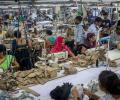
While the move may give a competitive edge over rivals like Bangladesh in the global market, several industry bodies raised concerns that many state governments may not implement it on the ground.

In a region increasingly shaped by competition and coercion, such collaboration strengthens security without confrontation, builds capacity without dependency and promotes order without domination, points out Dr Kumar.
FDI inflows into India are expected to register robust growth in 2026, supported by strong macroeconomic fundamentals, big-ticket investment announcements, sustained efforts to improve the ease of doing business, and a new generation of investment-linked trade pacts.
